

Blog
Replacement Wheels for Carts and Wagons: The Complete Guide to Choosing the Right Fit
TL;DR: Replacement Wheels for Carts and Wagons
- Three wheel types cover nearly every cart and wagon: hard rubber, pneumatic (air-filled), and flat-free.
- Hard rubber never goes flat and carries heavy loads on smooth surfaces, but the ride is firm. Best for hand trucks and utility carts.
- Pneumatic gives the smoothest, safest ride and is the right choice anytime you're carrying people, including kids' wagons and pony wagons. It does need a monthly pressure check.
- Flat-free splits the difference. No flats ever, with more cushion than solid rubber. Ideal for wheelbarrows and garden carts.
- Measure before you order. You need rim diameter, axle bolt pattern, and bearing size to guarantee a fit.
- Lapp Wagons has stocked replacement wheels since 1962, backed by a 1-year warranty and free shipping sitewide.
Replacement Wheels for Carts and Wagons: The Complete Guide to Choosing the Right Fit
It's Saturday morning, and you've got a truckload of mulch sitting in the driveway. You grab the garden cart, load the first scoop, and start across the yard to the flowerbed, but you don't get far. Sigh... the tire is flat again. You just pumped it up two weekends ago. This one is past patching, and it's time for a new wheel.
Finding replacement wheels for carts and wagons shouldn't be complicated. The good news is that choosing the right replacement wheel comes down to understanding a few key factors. At Lapp Wagons, we've been helping families and businesses find the perfect wheels since 1962, and we're here to get you rolling smoothly again.
Whether you need replacement wheels for a yard and garden work wagon, a kids wagon, a pony wagon, or a foldable wagon, this guide will help you find the right fit.






3 Questions to Answer Before Buying Replacement Wheels
The first step in choosing replacement wheels is understanding how you'll actually use them. The work your cart or wagon does determines which wheel type will serve you best.
Ask yourself these three questions:
- What will the wheel need to carry? Some wheels handle light loads, while others support hundreds of pounds. A kids’ wagon has different weight demands than a work wagon hauling firewood.
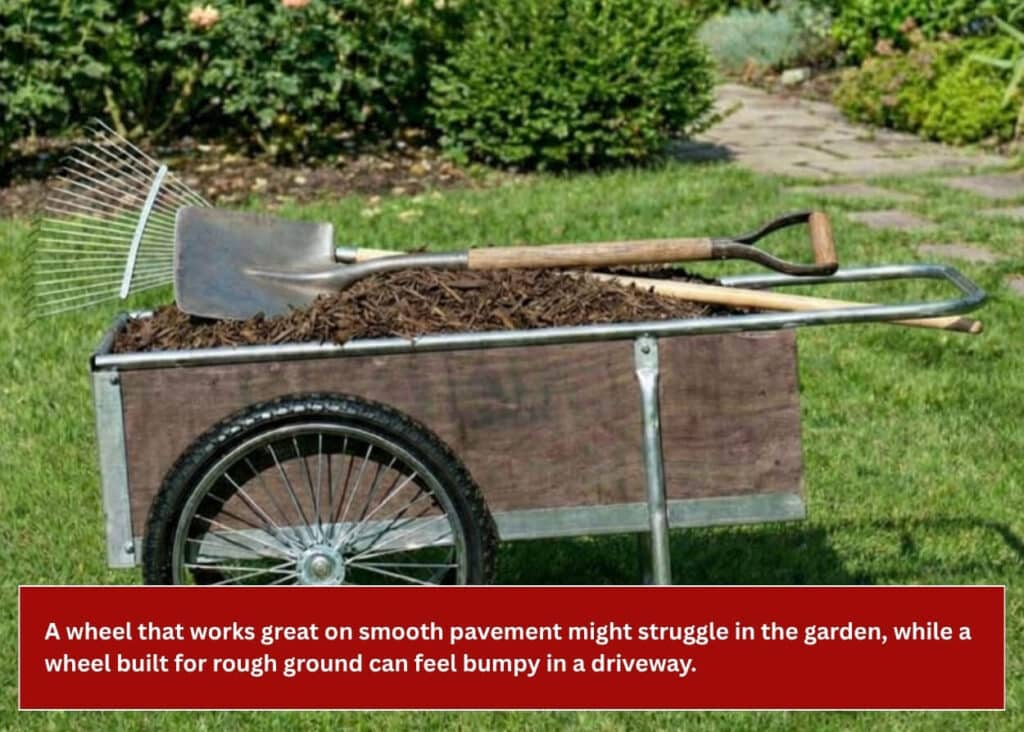
- What surfaces will it roll on? A wheel that works great on smooth pavement might struggle in the garden, while a wheel built for rough ground can feel bumpy in a driveway.
- Who will be using it? Wagons that carry children need a smooth, comfortable ride. Work wagons prioritize durability and load capacity.
With those answers in mind, let's look at your three options.
Understanding Your 3 Replacement Wheel Options
Now that you know your cart or wagon's job, let's talk about the three main wheel types we offer.
1. Hard Rubber Wheels: The Durable Workhorse
What they are: Solid rubber the whole way through, with no air inside. They arrive ready to roll and never need to be inflated.
Best for: Smooth concrete or pavement and heavy loads. They never go flat, they carry serious weight, and they ask almost nothing of you in maintenance.
The trade-off: The ride is firm. On uneven ground, hard rubber transmits every jolt straight through, which makes it a poor choice for carrying people or anything that can’t be jostled around, like a picnic. Browse our hard rubber wheels.
2. Pneumatic (Air-Filled) Wheels: The Comfort Choice
What they are: Air-filled wheels that work much like bicycle or car tires. This is what most people picture when they think of a wheel.
Best for: Rough terrain and anything carrying passengers. The air inside acts as a natural cushion, which is why pneumatic tires are recognized for absorbing shock and reducing fatigue on uneven surfaces.
The trade-off: They can go flat. Plan to check pressure monthly and watch for slow leaks. See our range of air-filled wheels.
3. Flat-Free Wheels: The Middle Ground
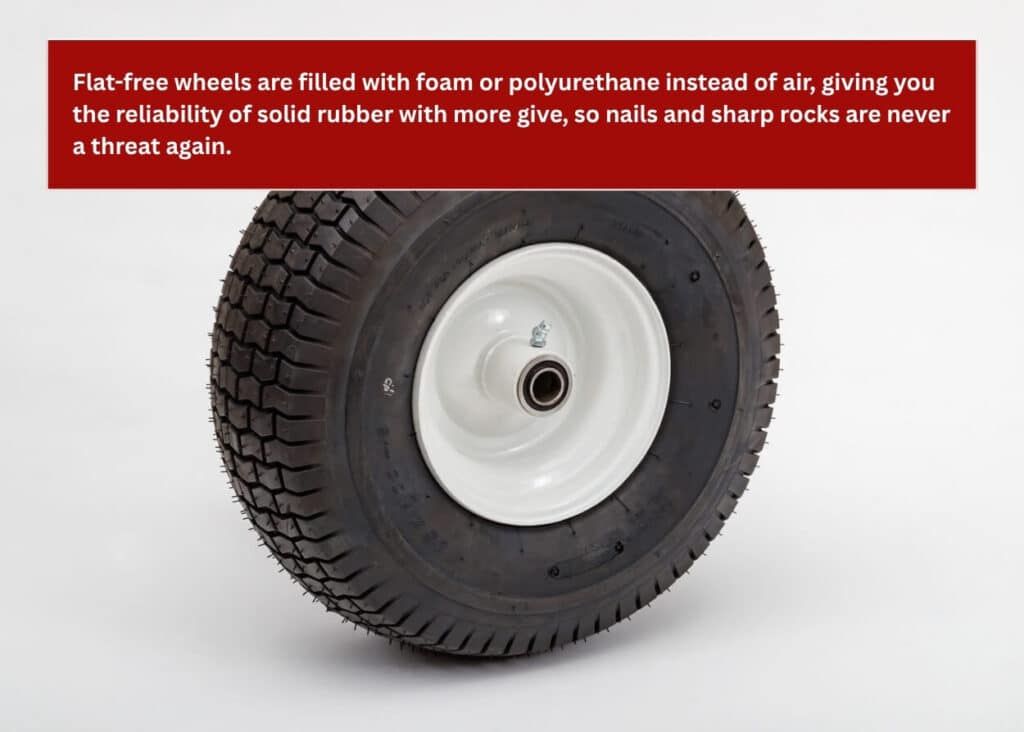
What they are: Wheels filled with foam or polyurethane rather than air. You get the no-flat reliability of solid rubber with noticeably more give.
Best for: Frequent, demanding use where a flat is unacceptable. Nails and sharp rocks are no longer a threat.
The trade-off: Slightly less cushion than a true air-filled wheel, and a higher upfront cost than hard rubber. Many people find that worth it to never patch a tire again. Take a look at our flat-free wheels.
4 Steps to Find Your Perfect Replacement Wheel Size
Before you order, you need to know your current wheel's size and type. Rim diameter, axle bolt pattern, and bearing size all have to line up, because a wheel that misses on any one of them goes back in the box.
Step 1: Check the rim diameter. Look at the side of your current wheel for a marking like 13" or 16". If you can't find one, measure straight across the wheel through the center.
Step 2: Look at the axle bolt pattern. Count the bolt holes and measure the distance between them. This is what makes sure your new wheel secures properly.
Step 3: Identify the bearing size. Your wheel connects to your cart through a bearing that sits inside the hub. Many of our wheels use a 5/8" bearing, though larger wheels offer other options, so check your existing wheel before ordering. To learn how these parts work together, see our guide on wheel hubs.
Step 4: Note your current wheel material. Hard rubber, pneumatic, or flat-free? Knowing this helps you decide whether to match what you have or upgrade to something better suited.
This takes a few minutes and saves real headaches. When in doubt, call us at 717-733-2117, and we'll help you identify the right wheel.
5 Common Cart and Wagon Types and Their Best Wheels
Different carts and wagons benefit from different wheels. Here's how to match your equipment to the right replacement.
1. Yard and Garden Work Wagons
What they do: Our yard and garden work wagons haul mulch, rocks, soil, and firewood, and the dumper models tip the load right where you need it.
What they need: Traction on grass and soft ground, plus enough cushion to keep a heavy load from jarring your arms.
Best wheel choice: Pneumatic or flat-free. Air-filled gives the smoothest pull over uneven ground. If you'd rather never think about air pressure again, flat-free is the better trade. Our lawn and garden cart wheels come in both.
2. Kids’ Wagons
What they do: Speedway Express play wagons carry children to the park, around the yard, and on family outings.
What they need: Comfort and safety above all, including reliable traction on wet grass or damp pavement.
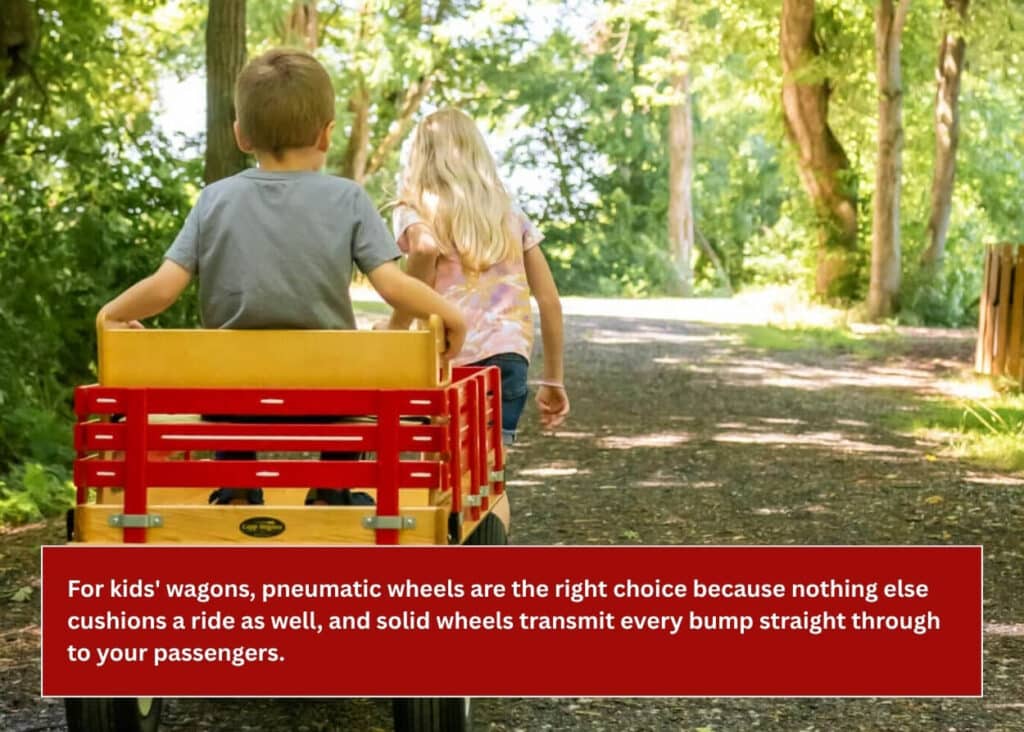
Best wheel choice: Pneumatic. Nothing else cushions a ride as well, and solid wheels transmit every bump straight through to your passengers. For kids' wagons, stick with air-filled wheels.
3. Pony Wagons
What they do: Our Speedway Express pony wagons hitch behind a miniature horse and carry one or two riders.
What they need: A comfortable ride for passengers and steady rolling at speed.
Best wheel choice: Pneumatic spoke wheels. Because pony wagons carry people, air-filled is the right call, and spoke wheels add support while matching the classic wagon look. We offer metal and plastic spoke wheels in a wide range of sizes.
4. Wheelbarrows
What they do: Wheelbarrows move soil, mulch, gravel, and concrete. Everything rides on a single wheel, so that wheel works harder than any other on this list.
What they need: Load capacity plus some give, since hard rubber alone makes a loaded wheelbarrow punishing to push.
Best wheel choice: Flat-free. Standard wheelbarrow wheel sizes are 13" and 16", which fit most wheelbarrows. For a closer look, see our guide to wheelbarrow tires.
5. Hand Trucks and Utility Carts
What they do: Hand trucks and utility carts move boxes, stock, and supplies in shops, warehouses, greenhouses, and nurseries.
What they need: Low maintenance and dependable rolling on smooth, level surfaces.
Best wheel choice: Hard rubber. Our hard rubber wheels come in 8", 10", and 12" diameters with a ribbed tread for traction in wet and dry conditions. They also run narrower than air-filled wheels, which helps in tight aisles.
How to Extend the Life of Your Replacement Wheels
Once your new wheels are on, a little upkeep keeps them rolling for years.
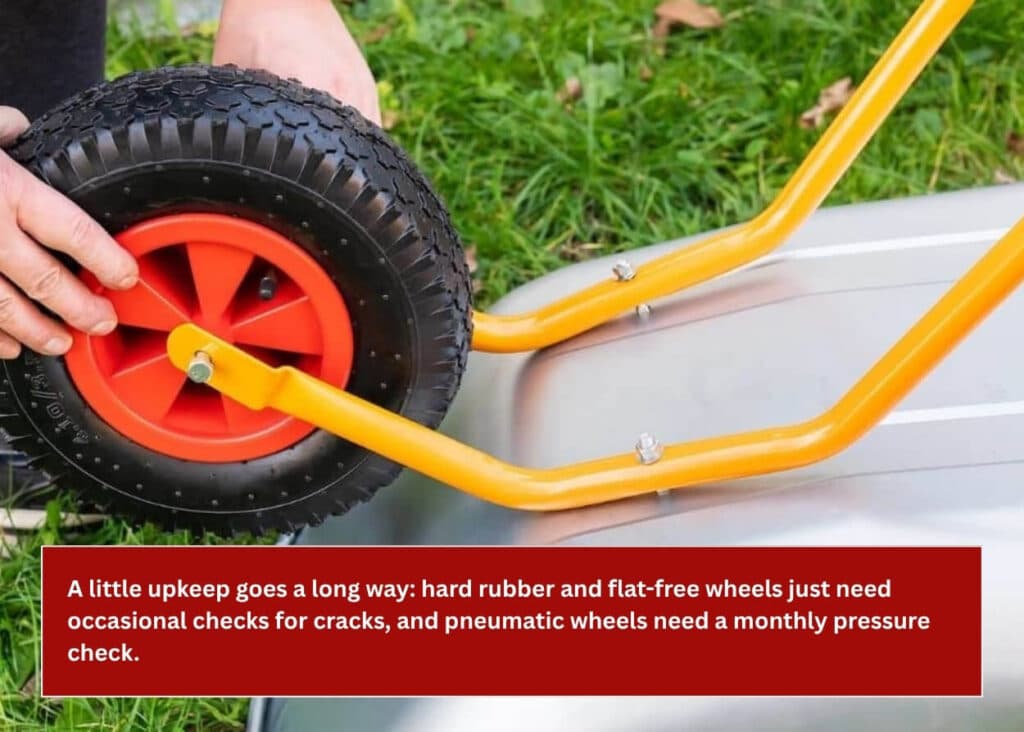
Hard rubber asks the least. Check occasionally for cracks or embedded debris and keep them clean.
Pneumatic wheels need a pressure check about once a month. Your recommended pressure is printed on the tire sidewall, so check there rather than guessing. If a tire loses air quickly, you likely have a puncture that needs patching.
Flat-free wheels only need periodic checks for cracks or damage.
Beyond that, store your cart or wagon somewhere dry and out of extreme heat, and replace worn wheels before they fail completely and damage the rest of your equipment. Regular inspection of tires and wheel ends is standard practice in any equipment maintenance program.
Get Rolling Again with the Right Replacement Wheels
Next Saturday, the mulch still needs moving, but this time the cart just goes. You load it up, cross the yard, dump it where you want it, and head back for another scoop without giving the wheel a second thought. Getting there is simple:
- Measure your current wheel using the four steps above.
- Match the wheel type to the job your cart or wagon actually does.
- Find your size on our tires and wheels page.
We've been making wheels since 1962, using premium natural rubber and precision ball bearings. Everything is backed by a 1-year warranty, kept in stock and ready to ship, with free shipping sitewide. If you'd like a second opinion before you order, call us at 717-733-2117. We want to help you get it right the first time.