

Blog, Wheelbarrow Tires
Wheelbarrow Tires: Types, Uses, and Which One Is Best For You
TL:DR - Wheelbarrow Tires
-
There are three main types of wheelbarrow tires: pneumatic (air-filled) for smooth rides, flat-free for durability and heavy loads, and solid rubber for extreme toughness with no maintenance.
-
Choosing the best tire depends on the job: homeowners and gardeners typically prefer pneumatic tires, while farmers and contractors benefit most from flat-free or solid rubber tires.
-
Proper maintenance, such as checking air pressure and storing the wheelbarrow indoors, extends tire life, but signs like frequent flats or difficulty pushing indicate it's time for an upgrade.
-
When upgrading, measure carefully, match the hub type, and select a tire based on your specific job needs, as higher-quality tires can significantly improve the wheelbarrow experience.
For a more detailed dive into choosing the best type of tire for your wheelbarrow, keep reading.
Wheelbarrow Tires: Types, Uses, and Which One Is Best For You
You’re halfway through a landscaping project. The sun’s out, the mulch pile is huge, and the wheelbarrow... sinks to the ground.
Because the tire is flat. Yuck.
It’s one of those small things that turns a productive day into a frustrating one. Whether you’re a homeowner hauling compost, a contractor moving concrete, or a farmer feeding livestock, small details like wheelbarrow tires matter more than you think.
At Lapp Wagons, we’ve seen how the right tire can make hard work easier. And the wrong one? It’ll slow you down every time.
In this guide, we’ll break down everything you need to know about wheelbarrow tires—from types to maintenance to upgrades. So you can choose the best option for your work, your terrain, and your sanity.





Types of Wheelbarrow Tires
Not all tires are created equal. And the kind you choose affects everything—from how smooth the ride feels to how much effort it takes to push a heavy load. Let’s take a look at the three main types of tires you’ll run into.
Pneumatic (Air-Filled) Tires
Pneumatic or air-filled tires are the most common type of wheelbarrow tire. They resemble a small bicycle tire, complete with an inner tube and a valve for air. Pneumatic tires give you a smooth ride, even over bumpy ground. They’re lightweight, easy to maneuver, and great at absorbing shock.
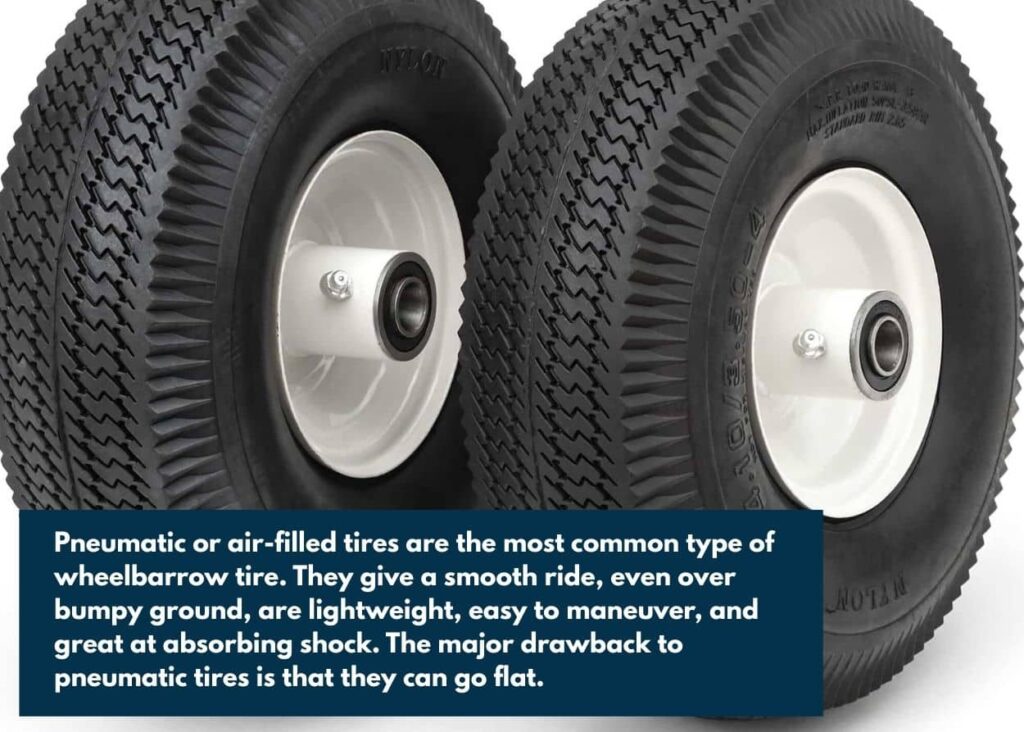
But here’s the catch: they can go flat. A nail, thorn, or sharp piece of gravel can leave you stranded mid-haul. And if you don’t keep the air pressure just right, they’ll wear out faster. Think of pneumatic tires like running shoes—comfortable and easy on your body, but not always built for tough, heavy-duty jobs.
Flat-Free Tires
Flat-free tires are the workhorse of the bunch. Sometimes called foam-filled or no-flat tires, these are designed to mimic the bounce and feel of air-filled tires, without the risk of a flat. They’re a favorite for landscapers and farmers who carry heavy loads or work in rough conditions.
Because they never deflate, they’re virtually maintenance-free. You don’t have to worry about air pumps, punctures, or slow leaks. On the flip side, they’re a bit heavier than pneumatic tires. And while they’re stable and strong, they don’t have quite the same bounce. You might feel a little more vibration when pushing across uneven ground. It’s kind of like switching from sneakers to hiking boots—less cushion, but way more durable.
Solid Rubber Tires
Solid rubber tires are less common, but they still have a place, especially in industrial settings or for folks who don’t want to deal with any kind of tire maintenance. These tires are just what they sound like: solid all the way through. No air. No foam. No frills.
They’re tough. They can carry heavy loads. And they don’t need pumping, patching, or fiddling. But they also don’t give much. There’s almost no shock absorption, which can make them harder to push on rough ground. Picture a steel-toed work boot: sturdy, protective, but not exactly comfortable.
Air-Filled vs. Flat-Free Tires
Most people are going to boil it down to air-filled vs flat-free tires.
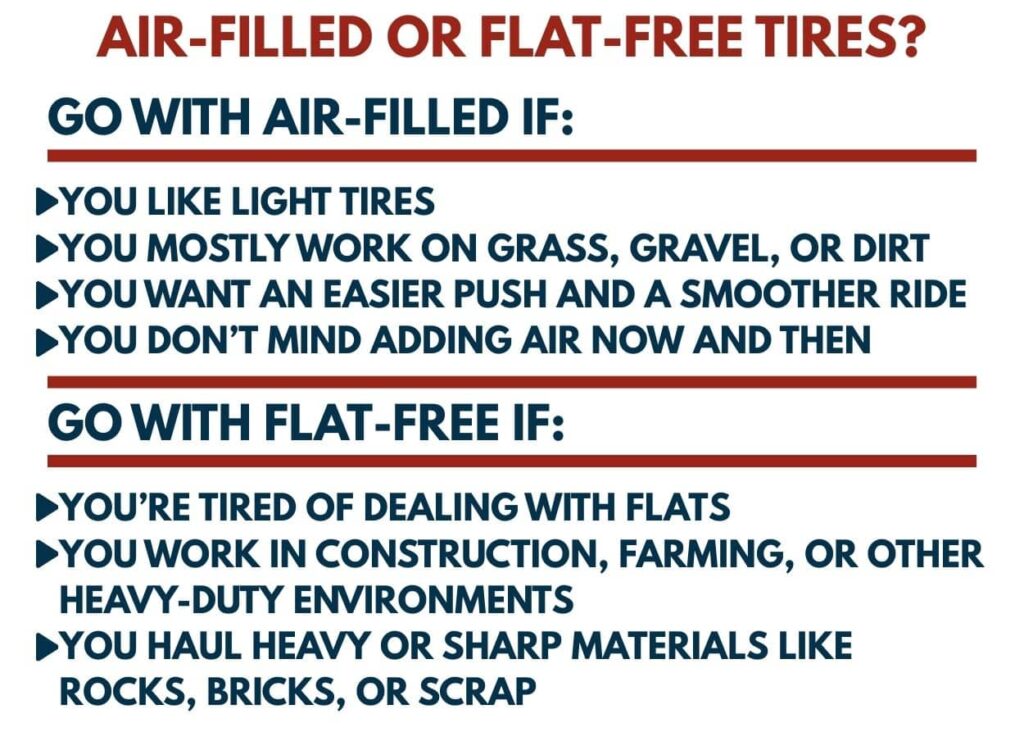
Here’s a breakdown of pneumatic tires vs flat-free tires:
Go With Air-Filled If:
- You like light tires
- You mostly work on grass, gravel, or dirt
- You want an easier push and a smoother ride
- You don’t mind adding air now and then
Go With Flat-Free If:
- You’re tired of dealing with flats
- You work in construction, farming, or other heavy-duty environments
- You haul heavy or sharp materials like rocks, bricks, or scrap
Cost Consideration: Air-filled tires are usually cheaper upfront. But flat-free tires often last longer, meaning fewer replacements down the road.
Choosing the Right Wheelbarrow Tire for Your Work
Picking the right wheelbarrow tire isn’t just about what fits—it’s about what works best for your job. One size doesn’t fit all. And the wrong tire can wear you out faster than the job itself.
Here’s how to make the right call based on what you do:
For Homeowners and Gardeners
You’re hauling mulch. Maybe some topsoil. A few flower pots or bags of compost. You need a tire that’s easy to push and comfortable to maneuver over grass and dirt.
Best Choice:
Pneumatic (air-filled) tires. They absorb bumps, keep the ride smooth, and won’t jostle delicate plants. And they make your wheelbarrow easier to push.
Pro Tip:
If you only use your wheelbarrow a few times a year, check the tire pressure before every season. They tend to deflate while sitting in storage.
For Farmers
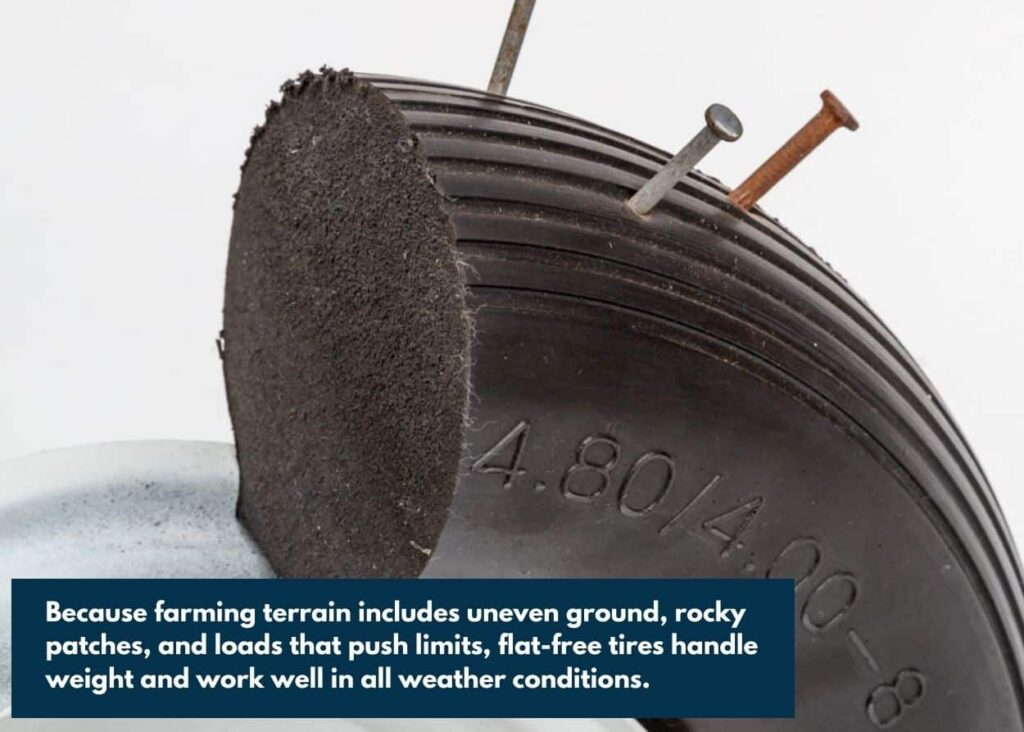
You’ve got uneven ground, rocky patches, and loads that push the limit. Hay. Feed. Tools. Sometimes all at once.
Best Choice:
Flat-free tires. They handle weight well and won’t leave you stranded in the field with a flat. Additionally, flat-free tires work in all weather conditions, whereas pneumatic tires can become stiff or flat in cold weather.
For Contractors and Heavy-Duty Use
You’re pushing bricks, concrete bags, or demolition debris across rough terrain. You don’t have time or patience to fix a flat.
Best Choice:
Flat-free or solid rubber tires. Flat-free tires give you a good balance between durability and ease. Solid rubber is tougher but harder to push.
Pro Tip:
If you work on a jobsite with nails or scrap metal, go flat-free every time. One puncture can really set your day back.
Things to Consider Across the Board
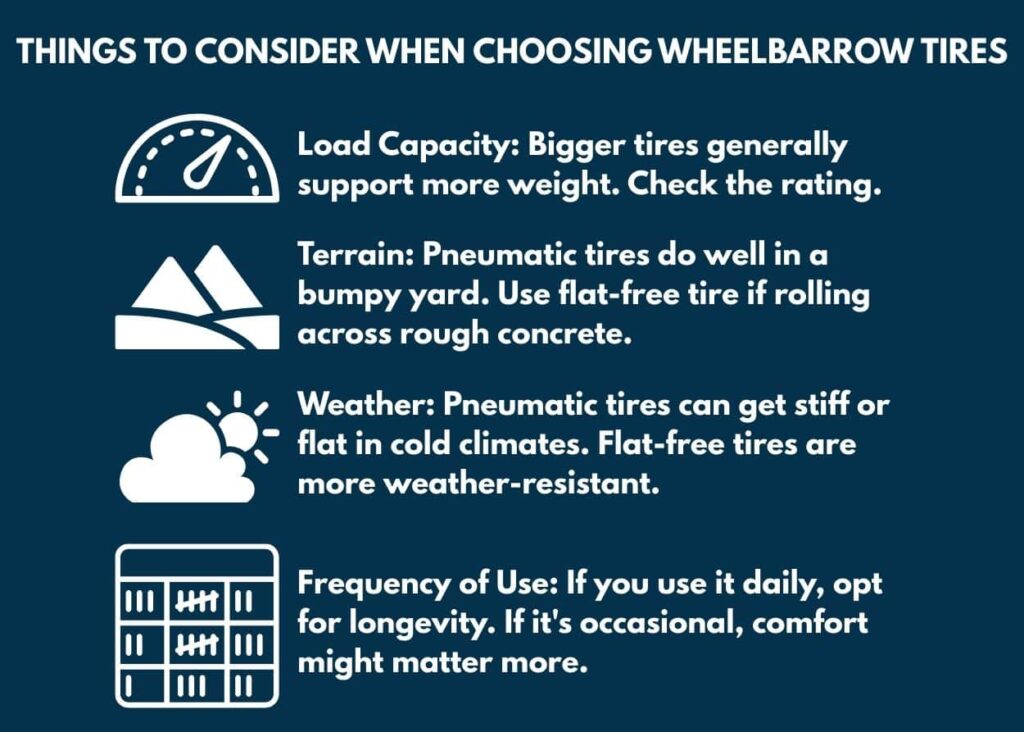
- Load Capacity: Bigger tires generally support more weight. Check the rating.
- Terrain: Bumpy yard? Pneumatic. Rough concrete? Flat-free.
- Weather: Pneumatic tires can get stiff or flat in cold climates. Flat-free tires are more weather-resistant.
Frequency of Use: If you use it daily, opt for longevity. If it's occasional, comfort might matter more.
At Lapp Wagons, we help folks match their wheelbarrow tires to the jobs they do. Because when your gear fits your grind, everything goes smoother.
Maintaining and Replacing Your Wheelbarrow Tires
Even the best tires need a little TLC, or they’ll wear out faster than they should.
Here’s how to make your wheelbarrow tires last longer—and when to swap them out.
Maintenance Tips
✔️ Keep the Pressure Right (For Pneumatic Tires)
Too low? You’ll get more flats and ruin the sidewalls. Too high? You’ll bounce all over the place.
Sweet spot? Check the side of the tire. Most show the recommended PSI. A simple bike pump and a pressure gauge will do the trick.
✔️ Store Indoors
Sunlight, snow, and rain will cause rubber to crack quickly. If possible, store your wheelbarrow in a shed or garage. Or cover the tire with a tarp.
✔️ Clean Off Debris
Especially after hauling mulch, compost, or wet soil. Debris traps moisture. Moisture causes rust. And rust ruins hubs.
Quick rinse = longer life.
✔️ Check the Axle and Bearings
Sometimes the “tire problem” isn’t the tire at all—it’s a bent axle or worn bearing. It could also be the wheel hub. But the long and short of it is, if your wheel wobbles or squeaks, don’t ignore it. That’s wear and tear sneaking in.
When It’s Time to Upgrade Your Wheelbarrow Tires
There’s a point when fixing and pumping just isn’t worth it anymore. And upgrading doesn’t have to mean buying a new wheelbarrow. Sometimes, all you need is better tires.
Here’s how to know it’s time to replace your wheelbarrow tires.
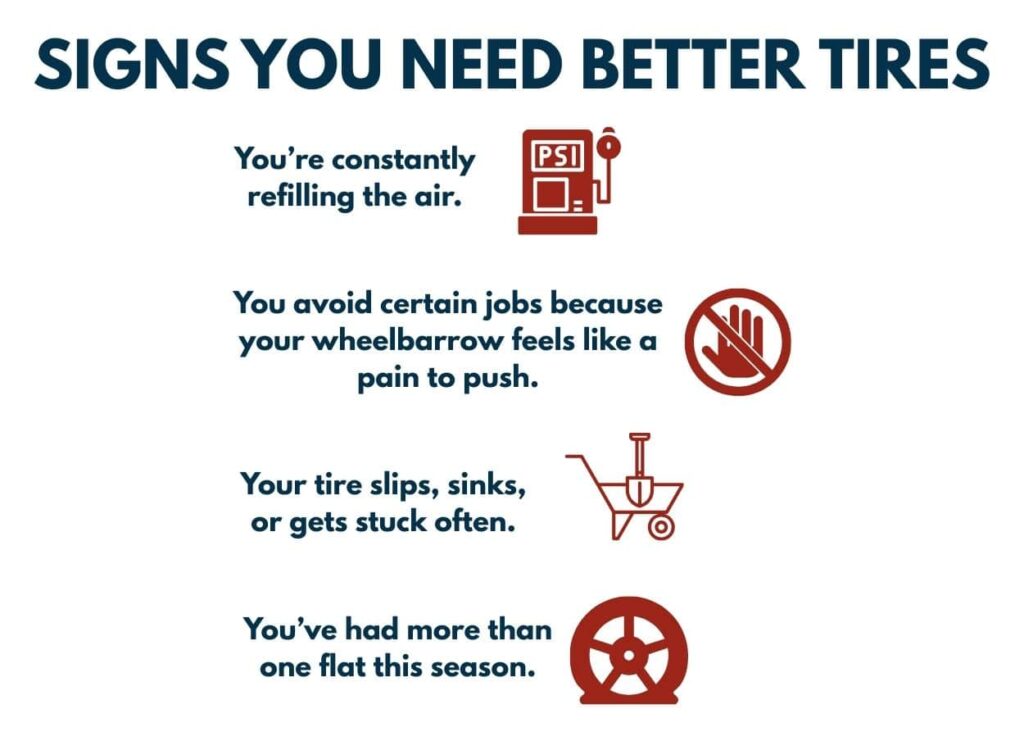
Signs You Need Better Tires
- You’re constantly refilling the air.
- You avoid certain jobs because your wheelbarrow feels like a pain to push.
- Your tire slips, sinks, or gets stuck often.
You’ve had more than one flat this season.
Sound familiar? You’re not alone.
A tire upgrade is one of the cheapest, fastest ways to improve your whole wheelbarrow experience. No more strain. No more wasted time.
Upgrading Tips
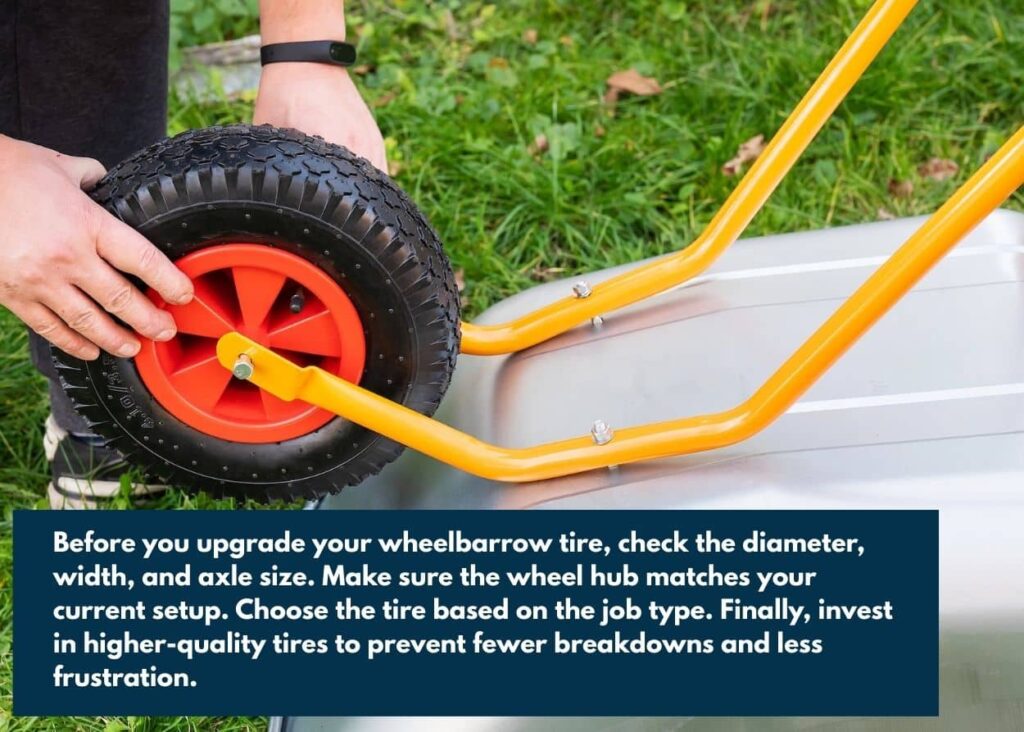
- Measure Before You Buy - Check tire diameter, width, and axle size. A 16-inch tire won’t fit a 14-inch tray.
- Match the Hub Type - Steel or plastic? Centered or offset? Make sure the wheel hub works with your setup.
- Choose Based on Job Type - Landscaping? Go air-filled. Heavy hauling? Go flat-free. Rare use? Either one, depending on the terrain.
- Invest Once, Enjoy Often - Higher-quality tires cost more upfront, but they pay you back in fewer breakdowns and less frustration.
Those small details you never think about until they don’t work anymore–those are the ones that add up and make a big difference in the end.
That’s why your wheelbarrow tires are a big deal! Who knew, right?!
Final Thoughts: Don’t Let a Bad Tire Slow You Down
Choosing the right wheelbarrow tire isn’t just about specs. It’s about making your work easier. Safer. Smoother.
So, whether you're planting a garden, building a patio, or feeding livestock, take a minute to think about your tires. Replace the worn-out ones. Upgrade what’s holding you back. And choose a tire that’s made for your kind of work.
At Lapp Wagons, we sell:
- Hard rubber tires
- Flat-free tires
- Wheelbarrow tires
- Air-filled tires
Need help finding the right fit? Lapp Wagons has your back—with high-quality, durable tires built for real-life jobs.